Intermediate & Advanced
Wave Riding
Using the wing as support while you actually surf — how to catch and read a wave, what changes about your technique, and the gear and etiquette that come with it.
Wave riding is where wing foiling starts to feel less like a wind sport and more like surfing that happens to have a wing attached. Once you're on the wave, the wing mostly stops being your engine and starts being a balance tool — something to hold out of the way while you actually surf the face, the same way a surfer's arms help them balance without powering them down the line. It's a different skill than anything covered in flat-water riding or downwinding, and it comes with its own etiquette to learn alongside the technique.
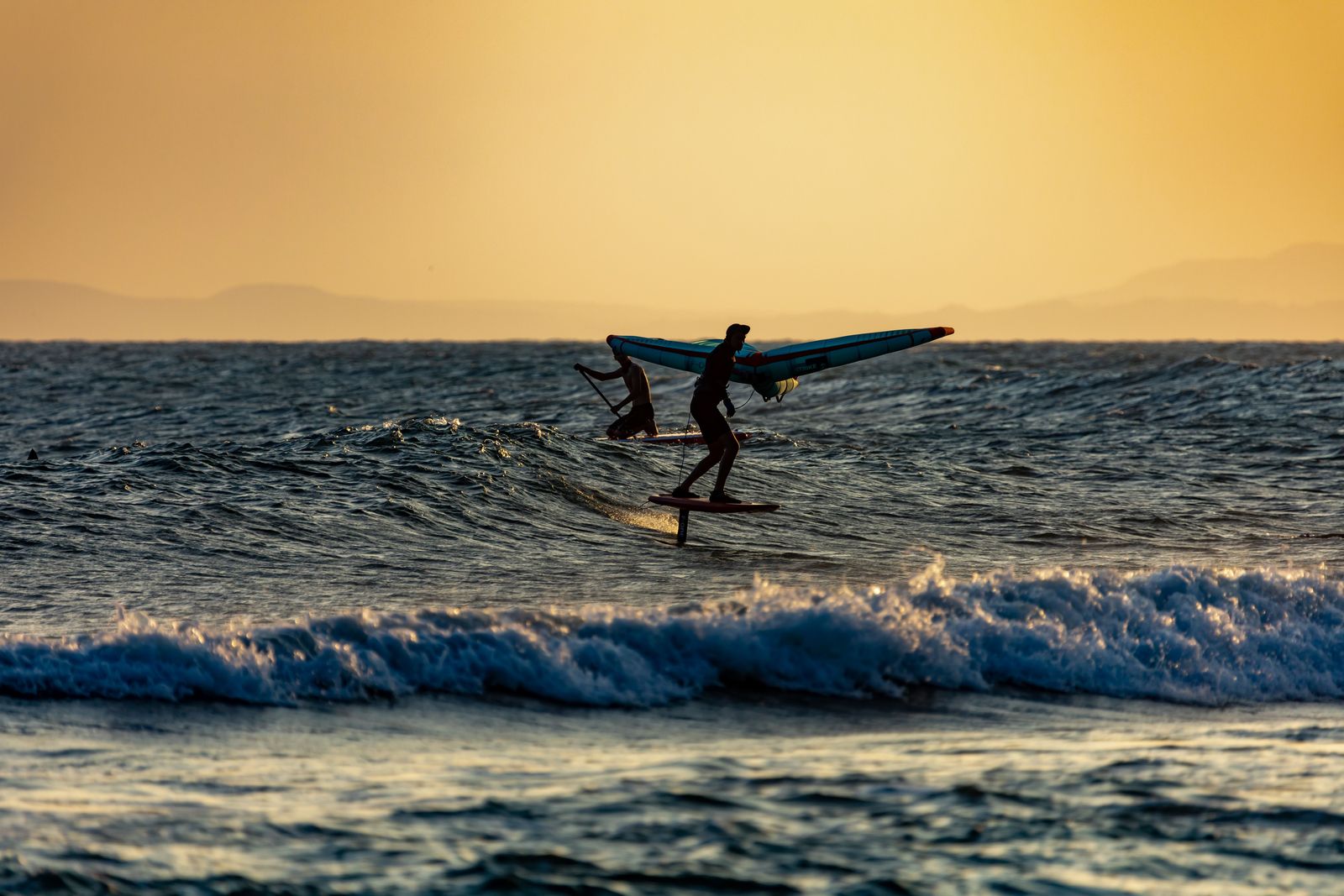
What's Different About Riding Waves
On flat water, the wing is doing the work the whole time. On a wave, once you're up and riding, you actively depower it — holding it by the leading-edge handle rather than sheeted in, up over your head or off to the side — so it stops pulling and just rides along with you while the wave itself provides the speed. Steering comes from your feet and body, the same way it would on a surfboard: weight on your back foot to turn, forward and centered to hold your line, knees bent, eyes up and ahead of you rather than down at your feet.
Before You Try This
This is not a place to bring beginner-level fundamentals. Get genuinely solid on flat water first — confident speed control, clean turns, a comfortable jibe — before adding breaking waves, other water users, and a foil under your feet into the same equation. Waves add real consequences to mistakes that are just an annoying fall on flat water.
Watch This
Wing Foil: Catching your 1st waves
Watching wave selection and timing in real time helps a lot more than a written description.
Watch on YouTube →Catching and Riding a Wave, Step by Step
-
Spot the wave early and get in position. Turn to sail in the same direction the wave is moving, ideally lining up in front of it before it's fully formed rather than reacting late.
-
Match your speed to the wave's. Use the wing to speed up or slow down until you're moving with the wave rather than racing ahead of it or getting left behind.
-
Depower the wing once you're riding the wave. Hold it by the leading-edge handle in a neutral position — overhead or out to the side — so it's not adding power you don't need anymore.
-
Steer with your feet and body, not the wing. Bent knees, weight distributed with intent, eyes forward — this is surfboard technique more than it's wing technique at this point.
-
Manage your position on the wave face. If you're moving faster than the wave, angle diagonally across it rather than straight down the line to bleed off speed. If you're slower, stay more perpendicular to the wave so you don't get caught by the whitewater behind you.
Gear for Wave Riding
Foil choice matters more here than almost anywhere else in the sport, and it depends heavily on wave size. Smaller, cleaner waves generally call for a smaller, more responsive foil that won't overpower a short wave face. Bigger swell — or a heavier rider — generally calls for more lift and a foil that can handle more speed without feeling unstable. There's no single right answer independent of the waves you're actually riding and your own weight, so treat this as a starting conversation with a knowledgeable shop rather than a fixed rule.
Safety and Etiquette Specific to Waves
Waves change the risk profile completely. Breaking whitewater plus a hard board and a hydrofoil moving fast is a genuinely dangerous combination, both to you and to anyone in the water near you — a foil strike in a crowded lineup is a serious injury risk, not just a bad wipeout.
That leads directly into etiquette, which matters more here than anywhere else on this site. Wing foilers can cover water faster and catch waves earlier than traditional surfers, which creates real friction in a shared lineup if you're not careful. Give surfers and other wave riders already out there priority, don't snake a wave someone else is clearly set up for, and consider starting in a less crowded spot while you're still learning — both to protect other water users and because you'll have more room to make mistakes safely.
Where to Start
Pick small, clean, relatively uncrowded waves for your first sessions — not a big swell day, and not a well-known, busy lineup where you'll be learning under pressure and in everyone's way. Check the Where to Ride map for spots noted as wave-friendly, and don't be shy about asking a local shop or instructor which nearby breaks are realistic for a first wave session versus ones better left until you've got more reps in.