Our Story
About
How I got into wing foiling, the friends who taught me, and why I built this site.
My wing foiling journey started in 2022. My friend Paul and I had been sending each other YouTube shorts of people wing foiling for a while — we were both interested, but neither of us had actually tried it. Paul went ahead and bought some brand-new gear and invited me out to the beach to give it a shot.
Neither of us had a clue what we were doing. We'd both sailed catamarans a little, but never windsurfed. I'd taken kiteboarding lessons years earlier and never followed through — life was too busy at the time. By 2022 that had changed: my schedule had opened up and I was living a lot closer to the beach, so we decided to actually learn.
I remember my first day on the water clearly — struggling, getting blown downwind, having no idea how any of the pieces worked, walking my gear back in over and over. Paul and I traded off: he'd go out and try, I'd watch YouTube tutorials on the beach, then I'd go try while he watched. We made tiny bits of progress, piece by piece.
After a while I decided it was time to get my own gear, and that process was overwhelming. So many brands, and so many variables — wing size, board size, foil size, mast length, inflatable versus not, downwind-specific gear versus everything else. I was a complete novice and didn't know anyone in the community yet. What I ended up doing was buying a beginner setup from someone giving up on the sport, off Facebook Marketplace.
Looking back, it wasn't great gear — some of my friends in the community still joke about my first foil — and knowing what I know now, I wouldn't buy that same setup again. But it got me on the water. It got me out there, doing it, and I'm genuinely glad it did. I also never took a real lesson — I've learned almost everything the hard way, though a few instructors who've seen me out on the water over the years have been generous with pointers.
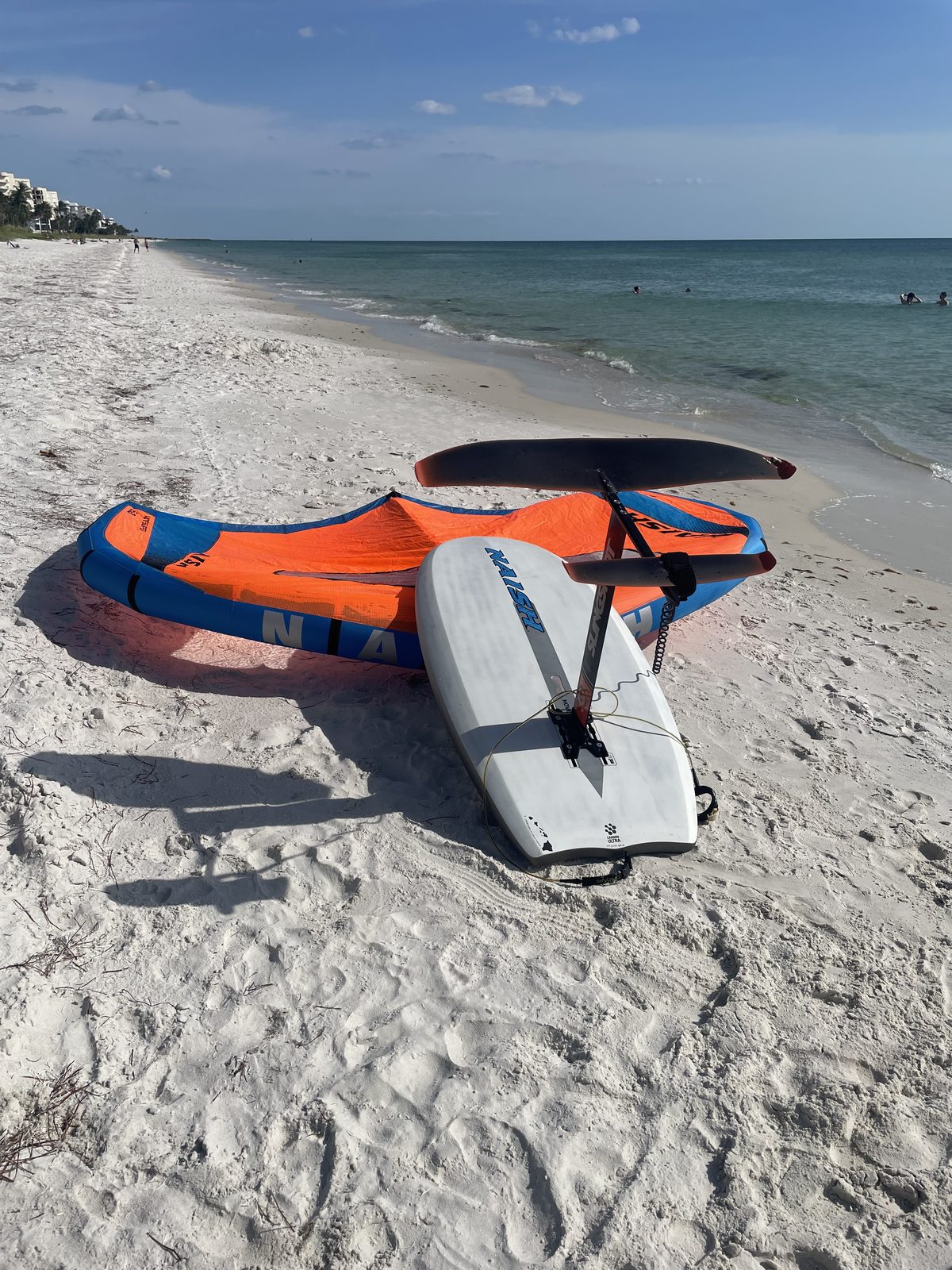 The exact rig that got me started — secondhand off Facebook Marketplace, 2022. Yes, it's the one my friends still give me grief about.
The next piece was learning the wind, because none of this works without it. I started digging into wind apps and websites, and slowly it started to click. On windy days I'd notice other people out on the water, and eventually I found the wing foiling community here in Naples, FL — small, but genuinely welcoming. A couple of people really took me under their wing, especially my friend Jack.
Jack is an accomplished windsurfer who'd gotten into wing foiling a year or two ahead of me, with a lot more experience already under his belt. We met on a rough day for beginners — a cold front had just come through, strong direct onshore wind, big swell, a sandbar working against us. Paul and I couldn't get upwind yet, so we spent most of that session just trying to paddle past the breakers. Meanwhile there was Jack, out past all of it, sailing around and making it look easy.
When we finally met on the beach, he introduced himself and spent time talking us through the fundamentals — what we needed to learn, what to work on. We had the same home beach, so we started sailing together. He'd sail, and I'd mostly get blown downwind, fall, get up, and walk my gear back upwind — again and again. People on the beach used to say things like "good for you, that looks tough" or "wow, you look tired." Somewhere along the way that shifted to "that looks like so much fun" and "that looks so cool." Jack and I still joke about that transition.
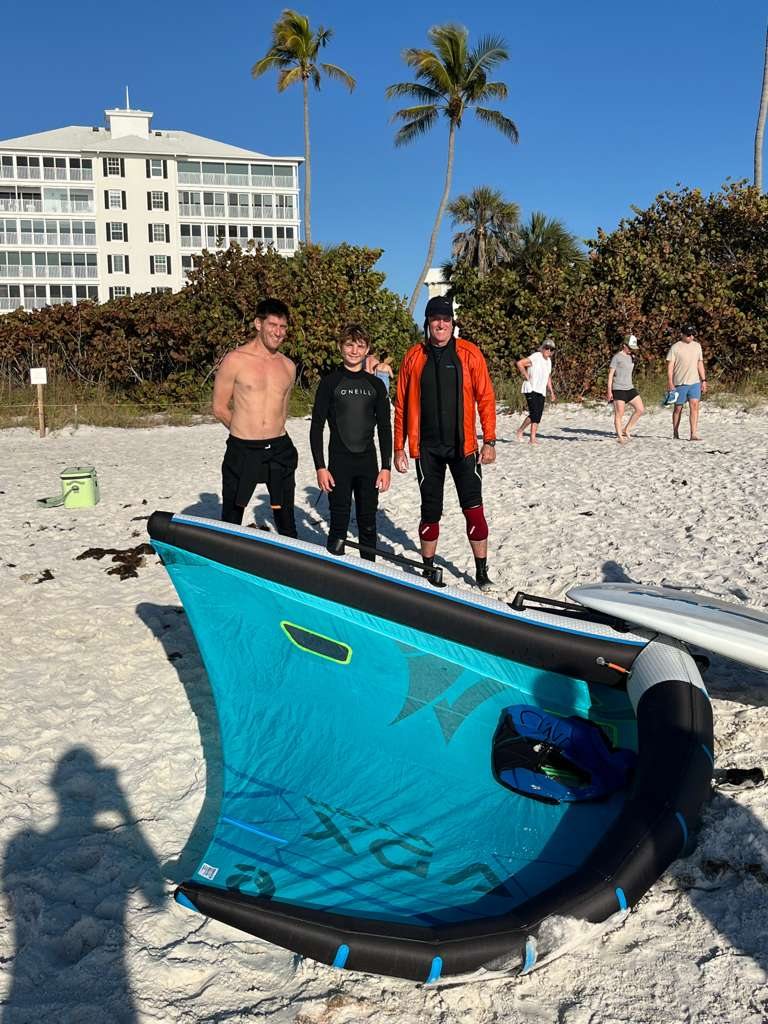 Me, Jack, and a friend gearing up for a session.
Part of learning this sport was understanding how wind direction relates to the beach you're standing on. Naples runs north-south, and that pushed us to start taking trips to Sanibel Island, which runs east-west — between the two, we're within an hour of every wind orientation we need for good side or side-onshore conditions.
Buying used gear came with its own problems, and again Jack came through — he started lending me gear he'd outgrown, and I eventually bought some of it outright, which meant I finally had solid equipment. I call him my meteorologist, half-joking, because he's constantly sending me wind updates, and early on he taught me to read whitecaps, wind lines, and ripples to spot gusts in light wind — techniques he'd carried over from years of windsurfing.
I've met a lot of other people through this too. It's a small community here in Naples, but when the wind's blowing and people are out on the water, you're hard to miss — you meet people fast. Community has always mattered to me, and having a group to sail with has made this so much better: encouraging each other, keeping an eye out for each other, talking conditions and technique on the beach, planning trips, and slowly learning this whole culture of chasing wind around the world.
I've been doing this since 2022, and it's changed my life. I've traveled to places I never would have gone otherwise, met people I wouldn't have met, and it's opened up more than I expected when I first watched those YouTube shorts with Paul. I'm still very much learning — I'd call myself a beginner who's a little past beginner at this point. People don't tell me I look tired out there anymore, and that feels like real progress. Jack always says there are three skills that make you a sailor: getting up on foil, going upwind, and jibing. Once you have those three, you can go sail almost anywhere.
That's the short version. I've got trip stories from along the way that deserve their own space — more on those soon. For now, this project is about building the resource I wish I'd had back in 2022: a place that helps someone go from "that looks fun" on a YouTube short to actually being out on the water, with the gear, the wind knowledge, and the people to make it stick.
Get in touch: admin@wingfoilamerica.com