Gear & Brands
Gear & Brands
The three things a beginner actually needs to buy, explained simply, with direct links to buy them and to real beginner package deals.
There are dozens of brands, a hundred board shapes, and an overwhelming amount of gear talk out there. None of that matters yet. You need three things — a board, a hydrofoil, and a wing — and this page gets you to a real number for each one in about five minutes.
Use the Calculator
These are starting points, not gospel — riders vary, and every quiver grows over time (most wing foilers end up owning 2+ wings for different wind days). Treat this as where to start shopping, not the only right answer.
Enter your weight, the wind you'll usually ride in, and your budget, and it'll spit out a starting size for all three pieces of gear. Treat the result as a smart starting point, not a locked-in answer — the explanations below tell you why those numbers matter so you're not just trusting a black box.
Understand What You're Buying
Three pieces of gear, three quick explanations. Read these once and you'll understand more about wing foil sizing than most people do after a full season.
Board (measured in liters)
Liters measure how much volume — and therefore how much buoyancy — a board has. More liters means more stability and an easier time balancing and getting up, which is exactly what you want while you're still learning, before you're reliably up on the foil.
As a rough starting point by rider weight:
| Rider weight | Board volume |
|---|---|
| Under 130 lbs (~59 kg) | 80–100 L |
| 130–165 lbs (~59–75 kg) | 95–115 L |
| 165–200 lbs (~75–91 kg) | 110–130 L |
| 200–230 lbs (~91–104 kg) | 125–145 L |
| Over 230 lbs (~104 kg+) | 140–165 L |
When in doubt, size up — a bigger board costs you nothing once you're foiling, but a too-small board can cost you weeks of struggling just to balance.
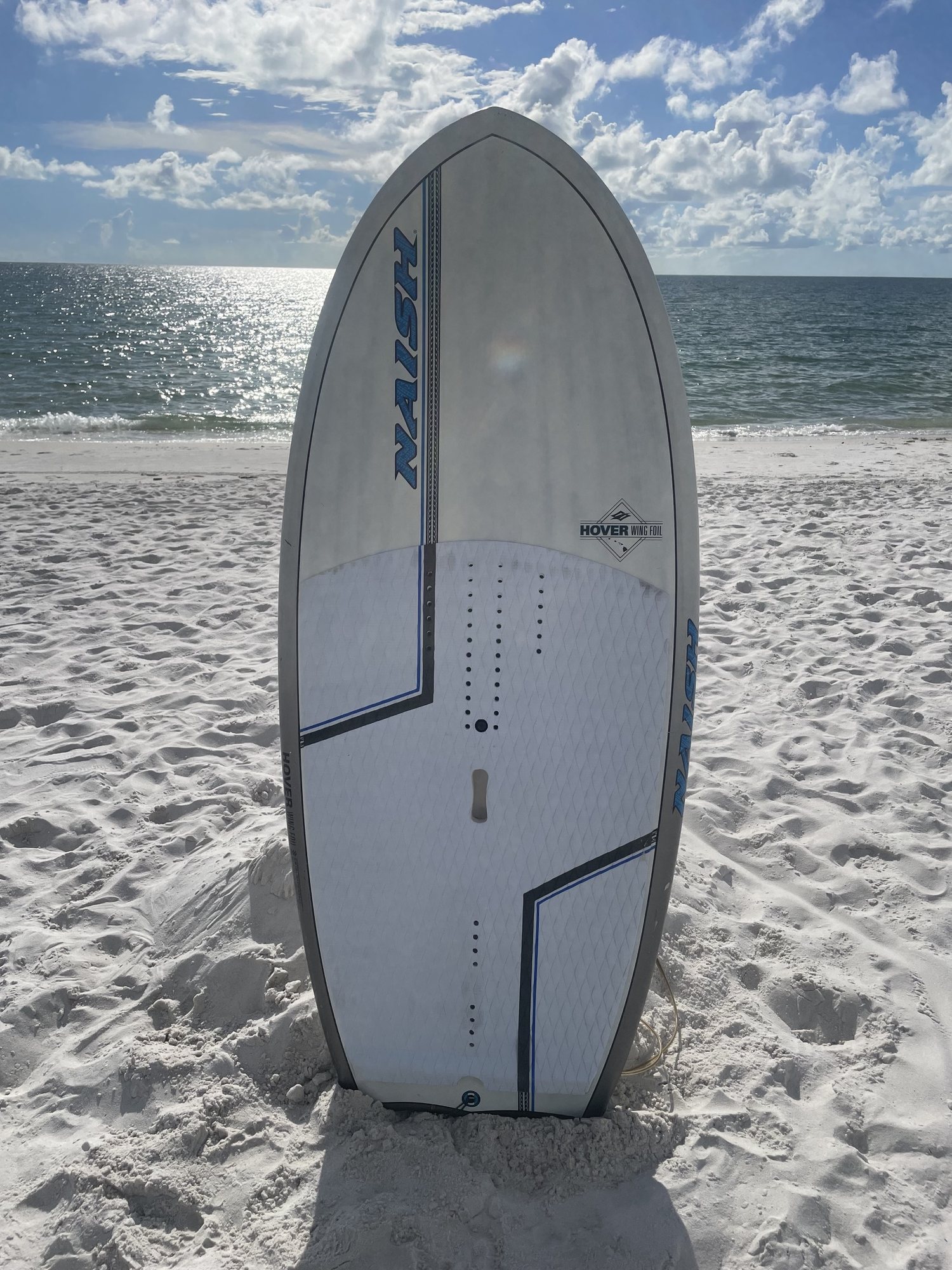
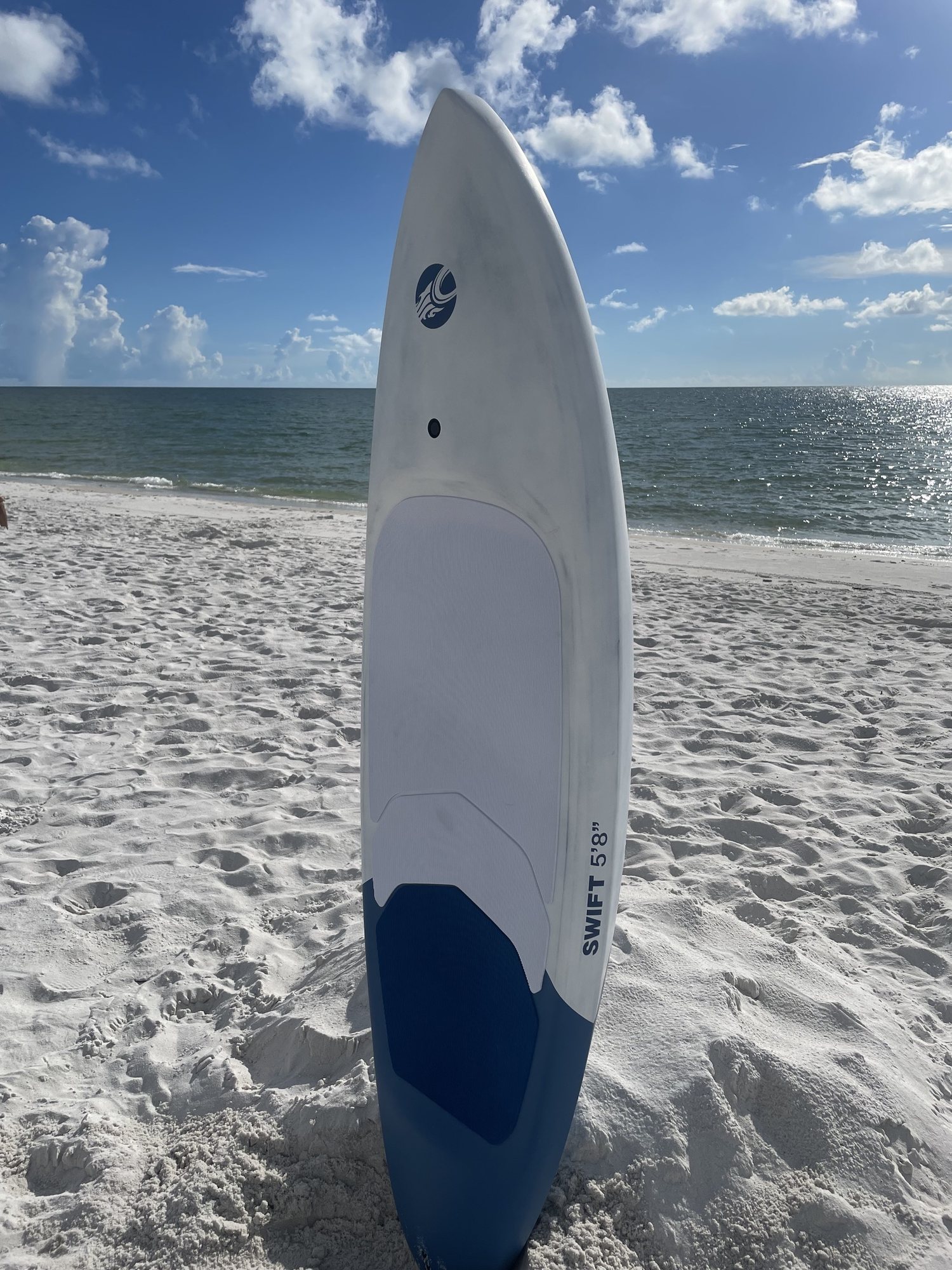
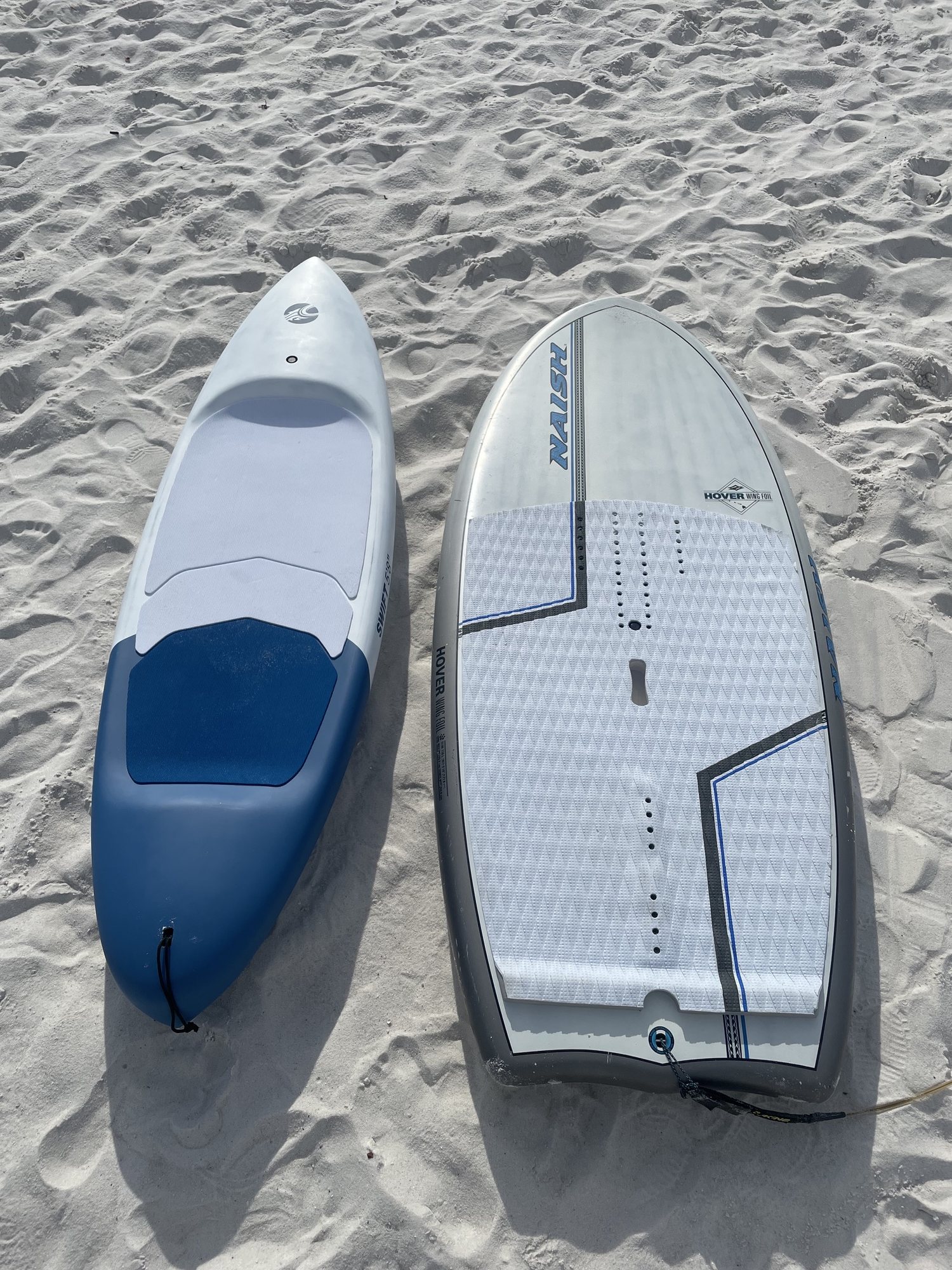
Beginner board vs. midlength board. The Naish Hover above is what I started on, and it's still what I'd point a first-timer toward — its size and volume make it stable and forgiving while you're just learning to balance and get up. The Cabrinha Swift next to it is the board I've since moved to: narrower, with noticeably less volume and stability, but its shape gets you up on foil faster once you've actually got your balance dialed in. It's a natural next step once the basics are solid, not a first board — see Level Up Your Gear for more on when and how to make that jump.
Watch This
Starting with a Small Board
Duotone Wing & Foiling
A look at when and why to size down once your basics are solid — the same board progression covered above.
Watch on YouTube →Shop wing foil boards at:
Hydrofoil (front wing size)
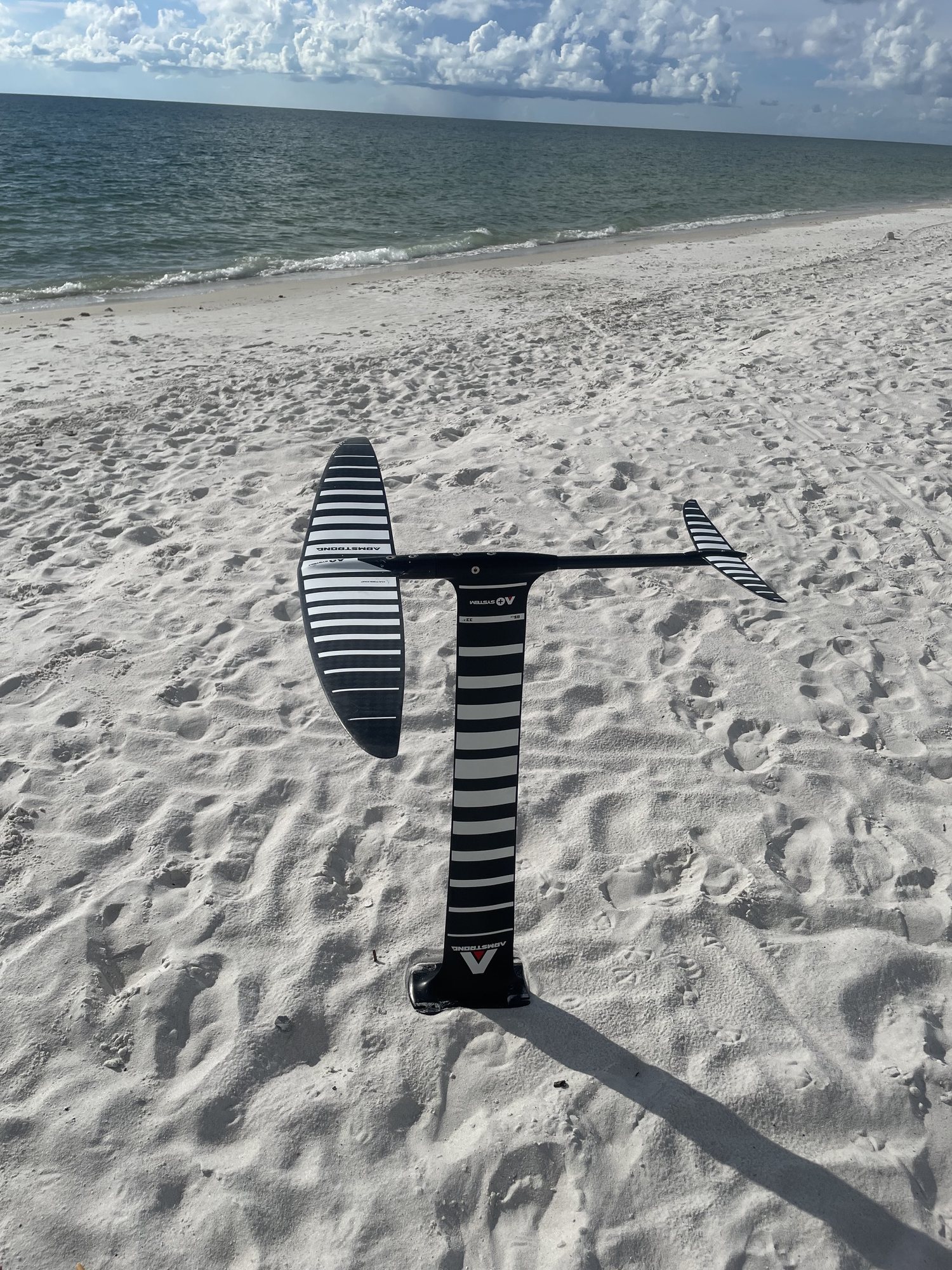
For your first foil, look for a front wing in the 1,500–2,000 cm² range. A bigger front wing means more lift at slower speed and a wider, more forgiving stability window — that's what makes a foil "sturdy" and beginner-friendly. Smaller, high-aspect foils are faster and more precise, but twitchy — they're a step for later, once you've got your balance dialed in.
Shop hydrofoils at:
Wing (measured in square meters)
Handheld wings are sized in square meters (m²), and the size you need depends on the wind: bigger wings (6-7m²) catch more power and work in lighter wind, smaller wings (3-4m²) hold less power so they're manageable in strong wind. Most beginners start with one wing around 5-6m² — it covers the widest range of everyday conditions — and add other sizes later once they know what they actually ride most. (For the full wind-speed-to-wing-size breakdown, see the Wind page.)
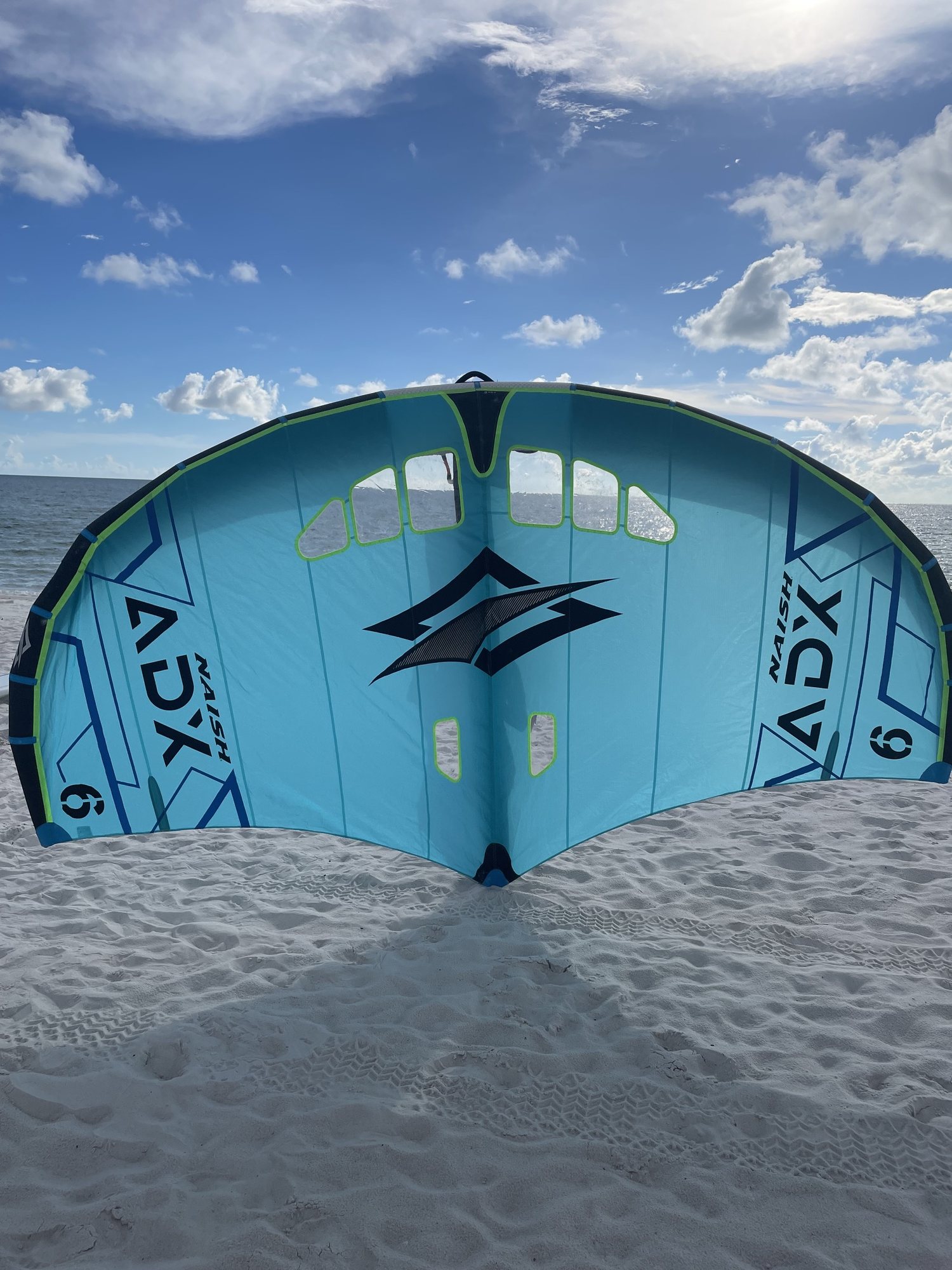
Shop wings at:
Choose a Beginner Package
Buying the three pieces separately gives you more control, but plenty of retailers sell complete beginner packages — board, foil, and wing bundled together at one price, built to work together out of the box. To keep this simple, here are a few real options instead of an endless list:
MACkite — Wing Foil Beginner Packages
Several complete packages including one built specifically for first-timers (board + foil + wing).
View packages →Windance — Wing Foil Packages
Multiple packages tagged "Beginner Friendly," bundling board, foil, and wing together.
View packages →Houston Kiteboarding — Wing Foil Starter Package
A complete starter set (board, wing, foil, pump, and both leashes) built for someone starting from zero.
View package →Adventure Sports USA — Wing + Foil
A South Florida wing foil shop (Doral, Jupiter/Tequesta, Coconut Grove). Shop wings, boards & foils individually — no pre-bundled package here.
View gear →A note on all three: package availability and pricing shift with stock, so if one you like is sold out, check back or browse that retailer's full package list for their next comparable option — it's still a shorter path than researching every board/foil/wing combination yourself.
Once you've actually got your setup, keeping it in good shape matters too — see Gear Maintenance & Repair Basics for the post-session routine and basic repairs that keep a wing, board, and foil working.
Curious what these brands have shipped lately? See What's New in Gear for genuinely new wing, board, and hydrofoil releases, checked automatically every week — no filler, just real releases with real sources.
Shop Direct From the Brands
Not every brand sells direct to consumer — some of these are better for researching specs and comparing gear than for actually checking out, but worth a look either way: