Intermediate & Advanced
Jumping & Freestyle
Taking it to the air — the basic jump, foot straps, and the progression path into freestyle tricks.
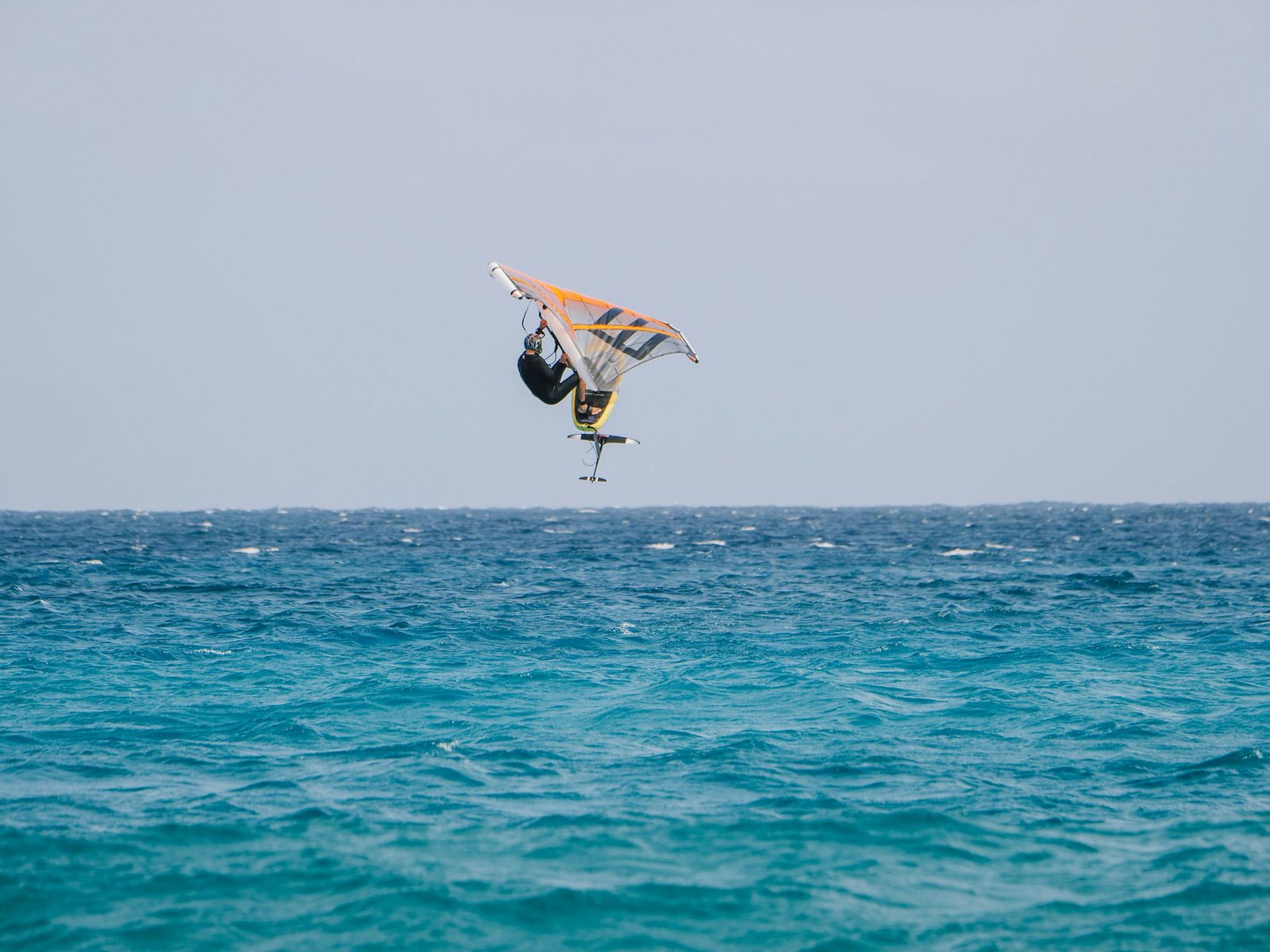
There's a specific moment every foiler remembers: the first time you leave the water on purpose instead of by accident. Jumping is the gateway to everything that comes after it in freestyle — spins, tweaks, combos — and the good news is the basic jump itself isn't nearly as complicated as it looks from the beach. Here's how to get there, and where it leads.
Before You Jump
Jumping isn't a beginner skill, and it shouldn't be your first goal. You want to already be comfortable riding on foil, turning with confidence, and staying up consistently without thinking about it before you start popping off bumps on purpose. If you're still working on the fundamentals, that's Step 1 for a reason — come back to this page once takeoffs, pumping, and controlled riding feel automatic rather than effortful.
The Basic Jump
- Build speed on a crosswind line. You need real speed before you try to leave the water — approach the jump moving across the wind, not upwind or downwind.
- Sheet the wing in and angle slightly upwind as you set up, loading the wing with power right before takeoff.
- Bend your knees and keep your weight on your front foot as you approach, with the nose of the board angled down slightly — don't lean too far forward.
- Shift your weight to your back foot and lift the foil out of the water — this is the actual pop. It's a weight-transfer move, not a big muscular jump.
- Keep the wing pulled in close once you're airborne. The wing wants to rise naturally as you leave the water — let it, but keep control of it rather than letting it float away from you.
- Stay centered and upright in the air. Don't lean back or throw your weight around trying to gain height — a stable, centered body position is what keeps the landing clean.
- Spot your landing before you touch down. Look at where you're aiming, and start tilting the nose slightly down as you descend so you land nose-first rather than flat.
- Bend your knees on impact to absorb the landing, with your weight balanced evenly across both feet rather than dumped onto one side.
Give yourself real space before you try this — clear water, no other riders, boats, or obstacles anywhere near your landing zone. A bad landing with company nearby is a real hazard, not just an embarrassing wipeout.
Foot Straps: A Real Gear Decision
Most beginner and intermediate wing foiling is strapless — your feet stay free on the deck the whole session. Once you start jumping seriously, though, a lot of riders add foot straps specifically for this stage. Straps keep your feet connected to the board during air time, which matters a lot once you're spending real time off the water and don't want to land on a bare deck with your feet in the wrong place. It's not required to start jumping, but if you find yourself getting separated from the board mid-air, straps are the standard fix — worth asking about next time you're shopping for a more performance-oriented board.
Progressing Into Freestyle
The basic jump is the doorway, not the destination. From here, the typical path looks like this:
- Light-wind carving first. Before you add height or rotation, get comfortable carving hard turns — 360° carves on the water — since wing control through a turn is the same skill you'll need in the air.
- Straight airs. Jumps with no rotation — just getting comfortable in the air, adding style and small tweaks (grabbing the board, extending your legs) without trying to spin.
- Add rotation. Once straight airs feel easy, start adding spins — this is where jumps become tricks in the traditional freestyle sense.
- Combine moves. Bigger, more technical combinations come once the individual pieces (the pop, the air position, the spin, the landing) are each solid on their own.
The thread running through all of it: wing control and air awareness are the real skills. Nail those, and the specific trick you're attempting matters less than you'd think.
Gear for This Stage
Some riders eventually run two different setups depending on what they're doing that day: a smaller, more aggressive front wing for jumping and boosting, and a larger, more stable one for carving practice in lighter wind. The same logic applies to boards — a slightly smaller board spins faster and feels lighter in the air once you're consistent, at the cost of needing a bit more wind and more consistent technique to get moving. None of this is necessary to start jumping on the gear you already have — it's worth knowing about once you're ready to specialize.
Staying Safe While You Progress
Give every trick room before you try it — clear water, no one in your landing zone, and a realistic sense of your own consistency before you push for more height or rotation. Progression in this sport rewards patience: riders who nail the basic jump solidly before adding rotation end up progressing faster than riders who rush straight to spins. There's no prize for skipping steps here, just a much higher chance of a bad landing.